Blog

Georgetown vs. Duke Men’s Lacrosse

This past weekend, DC Sports Photography Academy and our newest student, Bill, were on the sidelines when the Georgetown Hoyas took on the Duke Blue Devils in men’s lacrosse.

Bill has long been a photo enthusiast. When he son began playing youth sports,  Bill began photographing his games. He enjoyed photography so much that he began to upgrade his equipment and turned his passion for sports photography into a full-fledged hobby. He currently photographs for a George Mason men’s basketball blog and he loves doing it. He will also work for his alma mater, Elon University, when they are in town.

Before the game, we worked with Bill on setting up his camera for fast action and finding the right shooting location. It can be difficult to find the right spot and get focused during fast action play but as the game continued, Bill became more comfortable.

After the game ended, we talked about the best techniques for editing photos. We went through his photos together so we could offer him pointers on how to edit each photo so that the finished photo is truly spectacular.

As you can see in the incredible photos below, Bill caught on quickly! Now that Bill is armed with more knowledge and skills, we can’t wait to see how Bill takes his lessons with DC Sports Photography Academy and continues to shoot fantastic sports photos!


Are you ready to start shooting like a pro, like Bill? All skill levels are welcome at DC Sports Photography Academy! Visit our Packages page here to learn more about our packages and book your game today!

How To Build An Incredible Photography Portfolio

_CS10836If you are interested in taking your photography skills from hobby to profession, you need to have a great photography portfolio. Much like more traditional jobs have resumes and CVs, photographers need to have a portfolio to show off their work. The process of creating a portfolio can seem daunting. You may feel like you don’t have enough photos or that you need to sort through years of photographs. Perhaps you are not even sure how to get started creating your portfolio. If you want to take the step from hobbyist to professional, they you need a portfolio. Whether you are new to photography or have been shooting for years, learn how to build an amazing photography portfolio by following these tips!

Print vs. online

Before the age of the internet, photography portfolios had to be printed. But not technology has allowed for more options. With an online portfolio, you can quickly email your portfolio to potential clients or employer. However there is power in a high quality beautiful, well crafted printed portfolio. To determine what works best for you, evaluate your audience and your budget. Printed portfolios are typically a higher investment than digital portfolios but if you are frequently going to in-person interviews, then it may be more beneficial for you to have a printed portfolio.

Identify your target audience

It is important to ask yourself why are you creating your portfolio and who do you want to see it? Is your portfolio for editorial work or advertising work, for event works or are you hoping to be featured in a gallery? Do you want to only focus on a certain type of photography, such as food photography, so your target audience may not be impressed with wedding photos or portraits.

If you understand who your audience is, you can try to understand what they are looking for from a photographer and how they search for photographers. This can even help you determine if your portfolio should be printed or online.

Know your goals and choose a theme or style

It is essential that your portfolio has a goal. Why are you creating this portfolio? What type of people are you attracting to look at your portfolio? What type of photography are you interested in? What is your unique style? Perhaps you specialize in artsy black and white portraits and want your work featured in a gallery or you enjoy capturing moments during events and want to be hired as an event photographer. These two different styles would be two very different portfolios. At this point, you may have shot many different types of photos but you want to be clear on the theme and goals of your portfolio before you start choosing your photos.

Quality over quantity

Choosing photos are often the hardest part of creating a great portfolio. You do not want to use all of your photos for your portfolio. Remember that most people don’t have hours to go through your portfolio. You may also want to have a trusted friend help you with this as many photographers like to choose their favorite shots. While you will have your favorites, it can be hard for you to judge your own work. Find a friend or mentor whose judgement you trust to help you choose the very shots.

Beginning and ending

People are more likely to remember and be impacted by the first few shots and the last few shots in your portfolio. You want to pay special attention to the first few photos in your portfolio. Do they set the right tone for your portfolio? Are they going to keep your audience looking at your portfolio? Will your last photos leave a lasting impression? These are important factors in your portfolio!

Sequencing

The sequence of your portfolio can also be very important. You want the portfolio to feel like it flows naturally. The right sequence can help bring emotion to your portfolio, which can evoke a strong reaction from your audience. Strong reactions will help your audience remember your work!  You can sequence by mood, movement, color or composition.  You can choose one sequence or you can mix them in together.

Other Content in Your Portfolio

Your photos are only a part of your portfolio. If you wish, you can add more content to the portfolio to make it stronger and more memorable. You may wish to write an artist statement, which is a statement explaining your work or outlining your concept. You can also include a list of shots included, titles for shots or date and locations of the shot or a thumbnail contact sheet.

Building your portfolio can be daunting but it’s an excellent project for you to get a better idea of who you are as a photographer and the type of work you really love! If you want to add more sports photos to your portfolio, book a game with DC Sports Photography! It’s the perfect way to gain experience and photos of sporting events for your portfolio.

Sign up to receive updates, news and more photography resources to your inbox!

Enter your email address to subscribe to this blog and receive notifications of new posts by email.

How to Use Remote Cameras for Sports Photography

This month, photographers all across the country are setting up their gear to get the best photos during March Madness. If you have ever shot a sporting event, you probably already know how hard it can be to cover every angle possible. Especially in high level, fast-paced games like the basketball games during March Madness. That’s why photographers use remote cameras.

sports remote cameraRemote cameras allow photographers to shoot multiple areas of the game, race or match, without actually being there. It also offers a way to achieve multiple angles that photographers often cannot achieve on their own.

If you want to get started using remote cameras, there are a few things you should know. First you have to ensure you have the right camera. Not every camera will work as a remote camera. You need to have a specific port to plug in a PocketWizard. A PocketWizard acts as a switch that allows you to trigger the camera.

You will need two PocketWizards for remote cameras. One attaches to the remote camera and the other is used to trigger the remote. The second PocketWizard can be connected to a handheld camera or it can be used as a standalone transmitter.

Finally you will need a bracket or floor plate that will attach to the remote camera. It is essential that you receive permission from the building or the referees before you mount a remote. You want to ensure that it’s in a safe space and is not a hazard to the players or interfere with the game. Not only will this save you from interference and losing the job, but also from damaging your camera!

Once you have all your gear and permission from the building to set up a remote camera, you need to find the right place to set up your remote camera. You want to think where the action is going to occur and the different about the angles you can capture.

remote camera how toMany sports photographers choose the point of major action to set up their remote cameras. For example, in hockey you may want to set up a camera above one of the goals to get a overhead shot. In basketball, behind the hoop is a great way to capture really great action photos.

You can also choose to set up your remote camera fro
m above to try and capture the full view of the game, which would be impossible to catch from your spot on the floor.

Or maybe you want more options and angles of shots. For example, setting up a camera on the floor, while you’re on the other side of the court. Or setting up a remote camera behind a lacrosse goal while you’re on the other side of it, to give both perspectives of shots.

_RCS0261No matter where you choose to set up your remote camera or how you choose to use it, they can be invaluable tools if you want to advance your sports photography career.
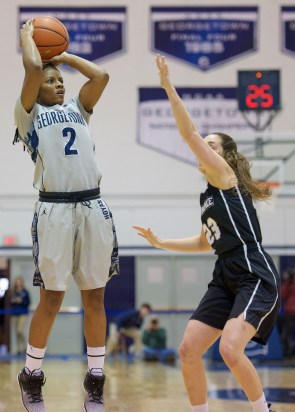
The next time you are browsing through sports photos, take a look at the different angles to determine if a remote camera is used and where it was set up to give you a better feel for how photographers use remote cameras for high profile games.

For more step by step instructions, check out this video by Imaging Resource on how to mount a remote camera here.

Understanding the Three Types of Sports Photos

Sports is more than just action shots. A great sports photographer captures each part of the sporting event, telling an entire story through their photos. You can also do this by focusing on three different types of photos you can take during a sporting event.

rm7_2213

Action Photos

As the name implies, these photos focus on the action in the game. It’s the jump shots, the goalie saves, the finish line crosses. These photos require you to anticipate the action of the game and be scanning the field and moving with the action.

To capture great action photos, we recommend having a basic understanding of the sport you are shooting and positioning yourself in a place where the action might take place. Sometimes that means running to home plate to catch a runner coming home.

Men's Basketball vs FordhamEmotion Photos

There is more to sports photography than the actual action. Sports photographers also capture the emotions of the athlete and the game. You want to think about the bigger story of the game, more than just the plays. It may be capturing an injured athlete being support from his teammate. Or the fans reactions after a game-winning shot.

If you want to capture emotions in your photos, it is important to continue shooting even after the whistle blows. Some of the best emotions occur just after the play. And remember, it’s not only the players who have emotions throughout the game. Remember to shoot the coaches, the team members not in the game and the fans as well. Those types of shots can add to the story.

crowdlas02.jpgGraphical Photos

Graphical photos are not as well known as the other two types of photos but they are often the most spectacular shots. In graphical photos, photographers tell the story through little details and small moments. For instance, in a group photo where the helmets of the players are all pointed to the coach, giving his pre-game speech.

It’s the details that help add to the story like  the shot of a challenge flag lying at the coach’s feet or the catcher’s mitt lying alone on the bench. These powerful photos will add to overall story and look great in a portfolio. So be on the look out for visually appealing graphical moments during the games and look for the tiny details.

When you add these three different types of photos together, you are able to truly tell the story of the sport though your photos, which is exactly what a great sports photographer does in every game!

Want more photography tips and tricks? Follow our blog to receive latest posts straight to your inbox!

Enter your email address to subscribe to this blog and receive notifications of new posts by email.

6 Biggest Mistakes New Sports Photographers Make

When you are first learning a new skill, you are going to make mistakes along the way. It is simply part of the process. But there are some mistakes you can (and should) avoid to help you become a great sports photographer right from the start. These are classic mistakes that many sports photographers make but that can be easily avoided.

sports-photography-mistakes

  1. Reviewing your photos after taking a shot

This is called “chimping” and it is a big no-no for sports photographers. Chimping is when you check every photo you take on your LCD after you’ve taken it. The reason you should not do this in sports photography is that it takes your eyes off the action. You never know what could happen next at a sporting event so you want to ensure you are keeping your eyes on the action! There will be plenty of time to review the photos after the game.

2. Stopping when the whistle blows

Even though the players stop after the whistle blows, it doesn’t mean you need to stop shooting. A central part of sports photography is capturing the story and emotions of the moments and those emotions often come after the play has been made. Keep shooting during time outs or after the action has stopped. You never know what emotion or moment you can capture.

3. Not knowing the venue and the rules of the venue.

It’s always important to be somewhat familiar with the venue of your sporting event and the rules you need to follow while you’re photographing. Depending on the level of the sport, there may be certain areas you can shoot from or certain places you are supposed to stand. You definitely want to be aware of your surroundings and the rules.

4. Using a flash

Flash photography is strictly prohibited. It is incredibly distracting to the athletes and will automatically give you away as a “newbie” photographer. You can adjust your settings to help you brighten up your photos.

Women's Basketball vs Dayton

5. Sticking to one angle

In sports photography, there are many different angles and ways to capture the moment and tell the story of the game. Great sports photographers understand the need to experiment with angles, anticipate action and move throughout the event to show many different aspects of the game.

6. Worrying about getting the perfect shot

It’s easy to do. We all want to capture the best shot of the game but when you worry or try to anticipate the best shot, you might end up missing something spectacular. Stay in the moment and stay in the action and keep shooting. During the editing phase, you can access the results but during the game, have fun, stay in the moment and relax. You will end up having much more fun and probably capturing better photos than if you were worried!

Wrestling vs EdinboroReady to improve your sports photography skills? Sign up for a class with DC Sports Photography Academy! You can choose one game to try it out or book multiple games to really enhance your skills. We offer classes for all levels. Our classes are live college sporting events where you can shoot the game with a professional, learn new skills and capture photos for your portfolio while having a blast! It’s an exciting and one of a kind photography class that you won’t find anywhere else!
If you love photography and want to improve your skills, sign up to receive news and information straight to your inbox:

Enter your email address to subscribe to this blog and receive notifications of new posts by email.

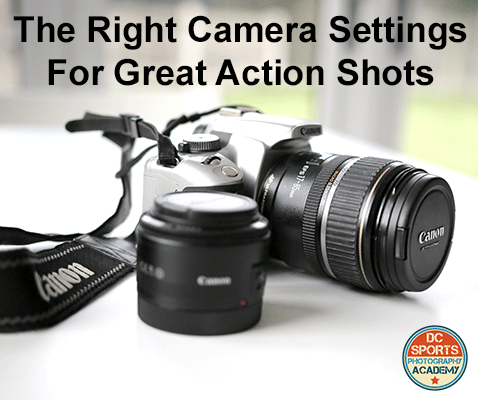
The Right Camera Settings for Great Action Shots

It’s essential that you get yourself set up for success before the action starts in sports photography. Before the starting whistle blows and the game begins, get your camera set up with the right settings so you can shoot like a pro!

right-camera-settings-action-shots

Check your shutter speed and set it to the appropriate speed. Remember this depends on what you are shooting and how fast the subject is moving.

Set your camera to the lowest possible ISO setting for the amount of light you have to work with. If you are shooting outdoors, use ISO 100 or 200. If you are in low light, use higher ISO numbers. It’s important to note that the higher the ISO, the more “noise” or graininess a photo will have. It’s important to find the right balance between noise and blurriness when finding the right ISO setting for your event.

Adjust your aperture. The aperture is the opening of a lens that light passes through and it is calibrated in f/stops. It can be a little bit confusing when you first start off. The lower the f/stop means that the larger the opening in the lens and the higher the f/stop, the smaller the opening. A larger aperture (meaning a lower f/stop) will help you increase your shutter speed and give you a shallower depth of field to help isolate players from the background. This will also help you have a fast enough shutter speed to stop the action.

Try burst or continuous shooting mode. Continuous shooting mode can take multiple shots at a time and can be best for certain types of fast-moving sports. However, remember that your memory card will fill up faster with burst mode so be sure yours has enough capacity or you will have to delete shots at half time or time outs.

If you are shooting an indoor event, you will need to adjust your white balance setting. The preset daylight white balance setting will usually work for outdoor lighting. Because indoor lighting is artificial, you may want to set up a custom white balance or it can impact your camera settings and change the colors of your shot.

You also need to turn your flash off! This is key! Flash photography can distract the players. If you have a slow lens that requires flash, you may want to invest in a faster lens or rent one from DC Sports Photography Academy.

Remember, above all, that sports photography is something that requires consistent practice. Get your settings correct and remember that with each game, you will improve more and more.

Get all of our photography tutorials and resources straight to your inbox.

Enter your email address to subscribe to this blog and receive notifications of new posts by email.

How to Find the Best Camera Equipment for Sports Photography

Sports photography requires you to capture fast-paced action and in order to do that, it is essential you have the right equipment for the job. DC Sports Photography Academy requires its students to use a DSLR camera that allows for the removal of lenses. This allows our students to get the best shots.

If you don’t want to make the investment just yet, we rent professional photography equipment for your classes. But if you are ready to invest in an exceptional camera for your sports photography, this article will give you details on what to look for in a camera.

cameraequipment

A DSLR camera is a digital SLR or single-lens reflex camera. It allows for detachable lenses that deliver precise photos. DSLR cameras are necessary for sports photography because they have faster internal processing so you won’t experience a lag time after you push the button to take your photo. You can capture the moment instantaneously with DSLR cameras. DSLR camera also make it easy for you to shoot many frames for long sequences in a single burst, which is perfect for capturing continuous action. DSLR cameras give you an unparalleled level of control and speed.

Now that you know you want a DSLR, what should you look for in one before your purchase?

There are DSLR cameras available for all skill levels. Be sure to check the sensor size, frames per second and the lens mount so start with. Another feature to look at is maximum ISO for shooting in door or low light action. The higher the ISO you camera is capable of, the more environments you can shoot in.

It’s also important to pay attention to lenses for DSLR cameras. The DSLR gives you the ability to switch lenses, depending on what you are shooting. If you are a beginner sports photographer, you may want to invest in a kit. The kits include both the camera body and a lens. Purchasing a kit can often be a better investment than buying a body and lens separately. More experienced photographers may want to purchase more specialized lenses to help enhance their sports photography skills. The more advanced your photography becomes, the more you will learn about using lenses and choosing the right one for your camera and situation.

You will also want to make sure you have a high capacity memory card and a camera cover in the event of bad weather. As you progress in your sports photography hobby or profession, there will be more extensive lenses and equipment you can purchase. For beginners, finding the right DSLR camera is more than enough to get you started shooting like a sports photography pro!

You can find the best cameras for sports photography online or at an electronics or photography store.

Sign up for photography tips, tricks and resources straight to your inbox!

Enter your email address to subscribe to this blog and receive notifications of new posts by email.

5 Tips For Taking Great Action Photos

Have you ever tried to snap a photo of your child running and it came out blurry? Or you wanted to get a great candid photo but your subjects were moving too quickly? Photographing action is necessary for sports photography but it can be a handy skill no matter what you choose to photograph. Although it may seem impossible to get that perfect action shot at first, we promise that it’s easier than you think! Follow these five tips to start taking fantastic action photos, follow these five tips.

action-photos

  1. Use a faster shutter speed

A fast shutter speed is one of the most important things to capture action shots. The right shutter speed will depend on how fast your subject is moving.  We recommend choosing a shutter speed of  1/400 for indoor motion and 1/1000 for outdoor action and taking some test shots before the action begins to see how sharp your images are. If you notice any blurriness, increase your shutter speed.

2. Find the right vantage point

Vantage point is key for a great action shot. You don’t just want to have a clear view, you also want to have the best vantage point. Consider the different angles of your subjects and how you can best see their reactions and movements.

3. Learn to pan

Panning refers to moving the camera along with the object you are trying to capture. Don’t wait for someone to run past you to catch their photo. Instead turn toward the subject and follow it as it moves past you. This increases your chances of capturing a sharper image. Ensure you have a steady stance and keep your feet firmly planted. Then twist from the waist to follow the movement. When the moment is right, fully press the shutter button.

4. Pay attention to lighting

Lighting can make a big difference in any photo but it can really make a difference in an action photo if you are not paying attention to it. Increasing your ISO can help you in these situations. Raising the ISO can help you to see more light when you shoot at a higher shutter speed. Be careful to test this as if your ISO is too high, the images could appear grainy.

5. Always keep shooting

The one thing you don’t want to miss is the action! Keep your eyes on the action and don’t stop to look at the photos you have already taken. You can do that once the game is over and the action has finished. You could miss a crucial moment and the more shots you take, the more likely you are to capture that perfect action shot.

These five tips will help you improve your action photography skills which can lead to fantastic sports photography or a truly beautiful photo of your child in motion. Whatever your photography goals are, it’s time to practice! Let us know what was the best tip for you and tag us @DCSportsPhotographyAcademy in your Instagram photos so we can see your amazing action shots!

Sign up to receive sports photography tips, tricks and special offers in your inbox!

Enter your email address to subscribe to this blog and receive notifications of new posts by email.

Georgetown vs Providence Women’s Basketball

Last week Georgetown Women’s basketball took on Providence Women’s basketball and DC Sports Photography Academy was there to capture it! Our student Rajani had experience with photographing still life portraits, social events and parties but he wanted to enhance his skills and build a sports photography portfolio.

One of the areas we focused on during this game was the art of keeping up with the speed of the game. It can be tricky in sports photography to stay on top of all of the action. It is key to keep people in focus and compose the shot properly.

Over the course of this game, Rajani was able to keep up with the fast-paced and captured some incredible photos!

The Hoyas also scored a win, defeating their opponent 72-70 in overtime! Nothing like an overtime game to help you learn how to manage the fast pace of sports photography.

Take a look at the amazing photos our student took below!

Want to be a sports photography pro too? We have packages and prices for all skill levels available!

George Mason vs Saint Louis Men’s Basketball

Michael wanted to experience a basketball game from a photographer’s point of view after spending a couple of years working for a women’s team as a manager. Having a bit of photo equipment, he decided to use his camera and a couple of lenses and have some fun.

This is a great example of how using a slow lens (f/5.6) and a cropped sensor camera affects the quality of your photos. Because the lens is not allowing as much light to enter, Michael had to compensate by bumping up the ISO to 6400 and dropping his shutter speed. This created images with motion blur and a high level of noise.